
The Light vs Dark Hexad of Pulsive Traits
Although of highest validity and utility, the Big 5 and HEXACO are not without faults. These faults are likely due to biases naturally expressed in our lexicon, conflating pulsive and affective facets, skewing what could be more general traits into specific profiles. Summarily — Neuroticism is too inwardly and affectively negative; Extroversion is too energetic and people-y; Agreeableness is too protagonistic and other-interested; Openness is too varied. These stereotypical conflations may reflect real correlations and/or consistent collective self-concepts. Regardless, pulsive traits work to neutralize and generalize Big 5 and HEXACO traits. After taking an assessment, this article can clear up potential incompatibilities between traits and our temper and type models.
Light vs Dark
The well-known Dark Triad groups three “dark” psychologies — narcissism, psychopathy, and Machiavellianism. Opposite these, Light Triads have been proposed. Similarly, the Big One or general factor of personality hypothetically superordinates more socially desirable traits (stability, conscientiousness, openness, extroversion, and agreeableness) and correlates to general intelligence and overall life success. Here, we use “Dark” vs “Light” for the traits which share more characteristics with these polarities.
“Just as little is seen in pure light as in pure darkness.”
— Hegel’s Science of Logic
Light is associated with sight because our nights, when we cannot see, are dark. And we do not normally know blinding light, only catching glimpses in the sun’s glare. Nevertheless, our days wherein we can see are created by a mixture of light and dark. Likewise, although “light” traits are overall more adaptive to dawning civilizations and societal advancement, “dark” traits also have fitness. For example, preparedness is “lighter,” yet to prepare forever would mean to never act.
- Light traits orientate towards perceived moderates and balances. Light traits are risk-mitigating, working with qualitative assurances. This adapts to higher investment, slow life K-strategies, for long-term (delayed or deferred) gratification. High lightness is “down to earth” — organic, plain, normative, habituated, grounded, unassuming, temperate, and neutral.
- Dark traits orientate towards perceived extremes and focuses. Dark traits are risk-exacerbating, playing the quantitative odds. This adapts to lower investment, fast life r-strategies, for short-term (instant or immediate) gratification. High darkness is “larger than life” — artificial, exaggerative, climactic, monumental, grandiose, audacious, emphatic, and fervent.
Note that people with light or dark traits will not necessarily be or seem like this themselves, but will be oriented towards this perception. For example, some light traits may be less common, standing out more and being riskier in specific circumstances.
Repulsion vs Attraction
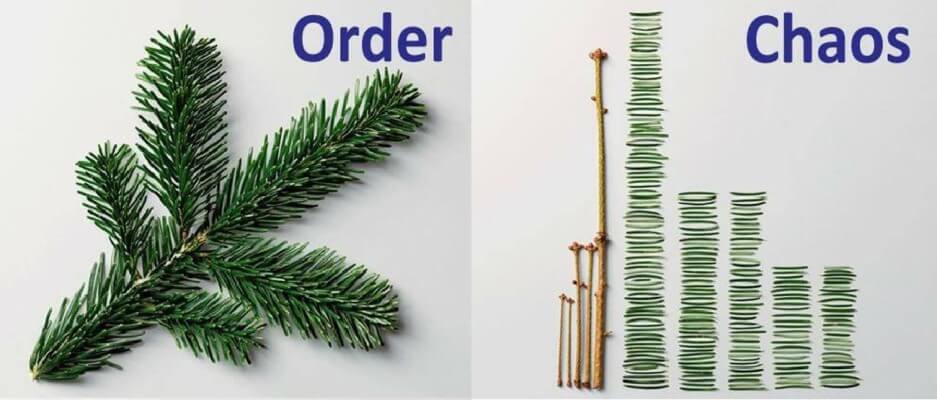
Order & Control | Openness & Chaos
In addition to life strategies, traits have orientations which are repulsive, of “negativistic(-)” energy, or attractive, of “positivistic(+)” energy, which are adaptive to environmental conditions.
“For in all chaos there is a cosmos, in all disorder a secret order, in all caprice a fixed law, for everything that works is grounded on its opposite.”
— Jung’s Archetypes and the Collective Unconscious
- Repulsive (-) traits orientate towards perceived control or order, through restraint, inhibition, containment, restriction, and constancy. This adapts to disadvantageous conditions of danger, upheaval, dispute, scarcity, and poverty. High repulsion is rigid, strict, severe, and exacting; derogated as “puritanical,” “tight-laced,” or “intolerant.”
- Attractive (+) traits oritentate towards perceived chaos or openness, through abandon, engagement, release, expansion, and versatility. This adapts to advantageous conditions of safety, stability, peace, plenty, and prosperity. High attraction is flexible, loose, scattered, and irregular; derogated as “wishy-washy,” “footloose,” or “permissive.”
Light Hexad vs Dark Hexad
| Light Repulsion(-): Static Order — Light repulsion adapts to slow life strategies under disadvantageous conditions by being static or orderly. It maximizes stability upon a small footprint, tending towards satisfaction in staying with less. High staticism is stoic, ascetic, and minimalistic — “no.” This may seem boring, overly serious, bland, dry, picky, or abstemious; derogated as “prudish,” “straightlaced,” “square,” “stick-in-the-mud,” “wet blanket,” or “vanilla,” particularly by dynamism. | Dark Attraction(+): Dynamic Chaos — Dark attraction adapts to fast life strategies under advantageous conditions by being dynamic or chaotic. It maximizes options across a large footprint, tending towards boredom in moving through more. High dynamism is dramatic, hedonistic, and consumeristic — “yes!” This may seem lively, boisterous, spicy, colorful, dicey, or lax; derogated as “libertine,” “slobby,” “fickle,” “turbulent,” “riotous,” or “degenerate,” particularly by statism. |
|---|---|
| Apoversion — Orientation towards disengagement and being “off;” as in being lethargic, blank, absent, reserved, numbed, dulled, mild, dampened, impassive, stable, diffusive, braking, and de-escalatory. | Neuroversion — Orientation towards engagement or being “on;” as in being energetic, restless, hyper, stimulated (over- or under-), aroused, vibrant, maximized, intensive, reactive, volatile, explosive, accelerating, and escalatory. |
| Bradoversion — Orientation towards a slow pace; as in being precautionary, redundant, thorough, checked, calculated, premeditated, rationed, managed, prepared, planned, practiced, deliberative, orderly, sorted, regulated, careful, or diligent. | Tachoversion — Orientation towards a fast pace; as in being momentary, immediate, expedient, convenient, spontaneous, impulsive, sporadic, quick, hasty, unrehearsed, disinhibited, casual, or flippant. |
| Paleoversion — Orientation towards the same-old; as in seeking continuance, consistency, regularity, familiarity, resemblance, similarity, comparison, homogeneity, locality, proximity, the ordinary and mundane. | Neoversion — Orientation towards the new and different; as in seeking change, transience, randomness, variety, strangeness, diversity, contrast, heterogeneity, globality, distality, the exotic and alien. |
| Light Attraction (+): Holistic Openness — Light attraction adapts to slow life strategies under advantageous conditions by being holistic or open. It maximizes flexibility through connective dimensions. High holism is public, systemic, and hypothetic. This may seem complicated, tangled, untamed, stray, nebulous, or boundless; derogated as “feral,” “unruly,” “bewildering,” “irreverent,” or “forward,” particularly by atomism. | Dark Repulsion (-): Atomistic Control — Dark repulsion adapts to fast life strategies under disadvantageous conditions by being atomistic or controlling. It maximizes potency through selective delineation. High atomism is occultic, *egocentric, and dogmatic. This may seem simplistic, reductive, suppressive, forced, manufactured, or isolated; derogated as “troglodyte,” “in-a-box,” “sanctimonious,” “regressive,” or “backwards,” particularly by holism. |
|---|---|
| Extroversion — Orientation towards the external, “real,” “multiplayer” world; as in being active, proactive, interactive, expressive, experiential, observant, or attentive. | Introversion — Orientation towards the internal, “simulated,” “single-player” world; as in being introspective, contemplative, ruminative, reflective, ideational, imaginative, or preoccupied. |
| Medioversion — Orientation towards high trust relations and consensus; as in being impartial, even-handed, balanced, consensual, reciprocal, mutual, proportional, equitable, fair, accountable, restitutive, compromising, cooperative, transparent, or honest. | Archoversion — Orientation towards power dynamics and outcomes; as in being partial, sided, unilateral (giving-taking), forcing-enabling, passive-aggressive, assertive-submissive, ranking (dominant-subservient), comparative (equal-hierarchical), advantageous, exploitative, venging-forgiving, transactional, competitive (wining-losing), tactical, or covert. |
| Circoversion — Orientation towards lessening wrongs and accepting the unknowns; as in being provisional, conditional, relative, abstracting, gradated, speculative, tentative, optional, drafting-revising, ambiguity-tolerant, equivocal, unassuming, uncertain, or modest (as in rational humility). | Orthoversion — Orientation towards filling the gaps and controlling the unknowns; as in being final, definitive, absolutive, concrete, black-and-white, conclusive, predictive, mandating, asserting, obvious, unequivocal, sure, certain, or confident (including about low self-estimations*). |
Explanations —
“One of these things is not like the others“
Reworking Neuroticism
Conventionally, “neuroticism” is narrowed onto emotions, then “negative” emotions, and then more onto the self-harmful anxious-depressiveness. This ignores or downplays neurotic orientation to outwardly “negative” emotions, such as rage or aggression, to “positive” emotions, such as mania or euphoria, and to all other forms of stimulation, including sensations and thoughts. Consider a person with a mind abuzz with ideas, who finds it difficult to turn the intellectual “noise” off, maybe even to sleep, or a person who continually turns the volume louder and louder. All orientation to stimulation and resistance to disengagement is neurotic.
- Stimulation-recoiling, sensitized or overloaded neuroversion: Neuroversion with nervous sensitivity (stimulus) is oriented to stimulation, which, being sensitive, tends to overstimulation and sensitization. This tends into hypersensitivity as the threshold is overloaded. This combination is likely the core of the “Highly Sensitive Person / HSP.”
- Stimulation-seeking, desensitized or underloaded neuroversion: Neuroversion with nervous insensitivity (stimulus) is oriented to stimulation, which, being insensitive, tends to under-stimulation and desensitization. This tends into escalatory behaviors to reach the threshold to satiate the neurotic drive. This is often classified as “excitement or sensation-seeking” within extroversion.
People with milder sensitivities exhibit a mix. All forms tend to a heightened reactivity to stimulation that tends to but seeks not to be under- or overloaded. This strongly relates to compulsive or addictive tendencies.
Reworking Openness
Conventional facets of closedness vs openness have been split into orthoversion vs circoversion (tolerance for ambiguity and flexible thinking), extroversion vs introversion (internal imagination and fantasy), and paleoversion vs neoversion (change and novelty-seeking). Unconventionality is moved to individualistic affective tempers. Specific focuses or interests (such as to artistry/aesthetics, nature, ideas, or experiences) likely depend on other factors; general “intellectual” activity and multidisciplinary appreciation is more likely primarily an effect of intelligence.
Reworking Agreeableness
The conventional conflation of cooperation with compliance creates an internal conflict within “agreeableness.” Who is more agreeable — those who are more compliant with disagreeableness, or those who are more repulsed by and don’t comply with disagreeableness? This is similar to the paradox of tolerance. The terms “agreeable” vs “disagreeable” further bias these facets towards compliance or subservience (putting the “agreement” into agreeableness) within competitive dynamics rather than cooperation. We propose instead a balanced spectrum, between more mutual or cooperative relations — medioversion — versus more unilateral or competitive relations — archoversion. Which role is taken within the latter is influenced by other facets. For example, in hierarchies, more antagonistic and individualistic tempers demand main or superordinate roles, while protagonistic and collectivistic tempers tend to accept supportive or subordinate roles, although from different motives. The former may pursue equality when losing, while the latter more often prefers equality. In contrast, medioversion is repulsed by all of these relations, only complying defensively or unintentionally, such as if the relation were perceived to be mutual but were actually one-sided.
Discussions and Applications
Industry or Productivity
“Industriousness” is conventionally an aspect of conscientiousness that has been excluded from bradoversion. Consider the facet of deliberation, thinking things through, using more time and energy. Long-term, being deliberative generally assures better production. However, over-deliberation reduces productivity. This extends to all facets of bradoversion. Although light traits are usually more industrious or productive, dark traits are more productive in “darker” conditions. All traits tend to be more efficacious in the conditions for which they are more adaptive or suited. Milder or closer to center traits are more adaptable and productive across environments.
Perception
The orientation of traits is based on subjective perception, not interpretation or objective reality. A hallucination, despite not being real, is part of the naturally perceived external environment that extroversion orientates towards. And someone who believes the external world is entirely a product of their own internal mind is not an introvert for believing that.
*Ego
None of the traits above, including archoversion or disagreeableness, are based on self vs other or estimations thereof. We use “egocentric” to describe dark(-)repulsion or atomistic control due to a linguistic gap, speaking to broader confusion in the matters of egocentrism, allocentrism, solipsism, altruism, and selfish/lessness. Dark control/atomistic traits tend to behaviors which facilitate egocentrism and also solipsism, but is only one factor. And, ultimately, the root of all choices stems from within oneself and creates a problem of apparent altruism.
- On egocentrism, including other-interested: The ego is “The self, especially with a sense of self-importance.” Egocentric means “selfish, self-centered, self-absorbed,” coming from roots meaning “self, I” and “central, focal, or main” We define egocentrism as the centering of any ego(s), including the collective group ego or egos of others. Unlike merely personal prioritization, rather like the false geocentric model that centered the universe around the Earth, egocentrism revolves everything around its own center. An egocentric personality which is also self-interested is self-centered — revolving around one’s own ego, including others if as a reflection or extension of themselves. Thus, they are interested in being the primary beneficiary. An egocentric personality which is also other-interested is other-centered — revolving around the other’s ego(s) or a group ego. They are rather interested in other(s) or the group being the primary beneficiaries. Other-centrists tend to use enablement, hypocrisy, nepotism, or other devices to turn the world around their centered ego. Other-centrists can be highly sympathetic for those within their center, but lack sympathy for true outsiders.
- On solipsism, including other-interested: Solipsism is “1. The idea that the self is all that exists or that can be proven to exist” or “2. Self-absorption, an unawareness of the views, needs or desires of others; self-centeredness; egoism,” coming from roots meaning “alone, sole, only” and “self (him-, her-, or it-).” We define solipsism as the high subjective perception of the self and high objectification of others, with low theory of mind or empathy (not sympathy). All humans have inherently, significantly better awareness of themselves than others; however, solipsism is a further exaggeration of this natural limitation. Solipsism is conflated with self-interest, which ignores other-interested solipsism. Other-interested solipsists tend to objectify and thus violate the personhood, agency and consent, of others and justify themselves by “positive” intentions and doing things “for another’s own good.” Just like self-interested solipsists, they react strongly and forcefully when people “malfunction” by not responding or acting the way that they believe others should. Typical examples include boundary violators. Extreme cases and characteristics can be found in factitious disorder imposed on another or angels of mercy/mercy murderers. Other-oriented solipsists can be highly sympathetic from their own experiences and perspectives, but lack real empathy especially for those who are different from them.
Light vs Dark Variability
Both light and dark traits vary, but light traits tend to intra-variability, whereas dark traits tend to inter-variability. A light personality has less variability or more constancy between points, such as at a different time or space. But lightness also has more range within itself at any given point. It is therefore “flatter” across points but “rounder” at a point. A dark personality has more variability or less constancy between points, tending towards extremes. But darkness also has less range within itself at any given point, shifting more when combined with other psychological or environmental factors. It is therefore “rounder” across points but “flatter” at a point.
Example: Dietary extremes such as restricted diets like carnivorism or herbivorism, ultra-processed or raw, overeaten or undereaten, even flipping from one to another such as in “fad dieting,” are all “dark” behavioral patterns; whereas, a balanced and varied (as in complex) diets like omnivorism, whole cooked foods, and moderate portions, kept relatively steady across time and space, would be “light” tendencies. The former is just as psychologically uniform as the latter, but each tend to different kinds of behavioral variability.