
Affectemper™

the Affective Triadic Personality Tempers
by PersonalityTapestry

Affects

Life needs to experience and regulate. Physically, this includes senses and signals, such as touch or taste and pain or hunger. Psychologically, affects are the “senses” of brain function. Like a vehicle’s sensors and dashboard, affects indicate subjective features or status of being and “positive” or “negative” valuations or valences. Affects are strongly tied to motivation, learning and memory.

Affects inform and motivate us in different ways. Subconscious to conscious, these can exist at seemingly more reactive and subordinate “lower” levels to more proactive and executive “higher” levels. Multiple affects can exist and conflict with one another. People tend to perceive conscious, “higher,” or secondary or reflexive affects as more under their own agency and identify with as “themselves.”

  • Emotions, attitudes, or moods occur from more basic experiences (e.g., sorrow) to more advanced (e.g., remorse or poignance). These are often subconscious or suppressed and not perceived as influencing the worldview. Emotions are often defined, described, and discussed in convoluted association with what they tend to convey. For example, emotional suspicion suggests someone or something is an actual suspect. Perhaps more complicatedly, emotional love, a feeling of reinforcing togetherness, is distinct but parallel to philosophical love, the idea of goodness to and from another — two loves not necessarily congruent. Emotional attitudes may feel more like a state of mind, with weaker qualia. Moral or ethical feelings may come from the combination with pulsion and/or cognition: e.g., righteous (convicted belief) anger (emotion).
  • Awareness is subjectively perceived experience. Forms include consciousness, sentience, and cognizance, with unsettled and disputed meanings, covering raw awareness, as in lights on, dimmed, or off; the felt awareness of more physical, such as pain or pleasure, to more psychological experiences; or the awareness of the distinct existence of the self versus the others. Attention is exclusively concentrated awareness.
  • Sapience (taken from wisdom, to mean wise of awareness) is the awareness about awareness or meta-awareness. With free will and metacognition, sapience opens the potential to be truly rational agents, in contrast to misperceived irrationality, and justifies the prescription of personhood, as in human beings.

affect (noun): “1. (psychology) A subjective feeling experienced in response to a thought or other stimulus; mood, emotion, especially as demonstrated in external physical signs. 2. (obsolete) One’s mood or inclination; mental state. 3. (obsolete) A desire, an appetite.” from Latin affectus: “1. affection, mood, emotion, feeling 2. affection, fondness, compassion, sympathy, love;” also, affection (noun): “1. The act of affecting or acting upon. 2. The state of being affected, especially: a change in, or alteration of, the emotional state of a person or other animal, caused by a subjective affect (a subjective feeling or emotion), which arises in response to a stimulus which may result from either thought or perception. 3. An attribute; a quality or property; a condition. 4. An emotion; a feeling or natural impulse acting upon and swaying the mind. 5. A feeling of love or strong attachment.” from Latin affectiō: “1. The relation or disposition towards something produced in a person. 2. A change in the state of the body or mind of a person; feeling, emotion. 3. Love, affection or good will towards somebody.” both from Latin afficiō: “1. I treat, manage, handle 2. I influence, have an effect on 3. I attack, afflict, weaken, impair” from faciō: “1. I do (particularly as a specific instance or occasion of doing) 2. I make, construct, fashion, frame, build, erect 3. I make, produce, compose 4. I appoint” from Proto-Indo-European *dʰeh₁-: “1. to do 2. to put, place

Tempers

Tempers are a mixture where, when points on a spectrum (like traits) cross certain lines or thresholds, it also changes the standpoint categorically (like types). Therefore, tempers are determined by preference or precedence, of both quantitative and qualitative degrees of qualitative personality facets. Proportions or ratios create complexes of favoritism and rank, finding the perceived categories more or less favorable or unfavorable and arranging accordingly. This ties into matters of taste and timing. Temper emphasizes regulatory, temporal, meteorological, and seasonal attributes, balancing a ruling habitual baseline with shifting and merging blends. Personality tempers may be aptly assessed through ranked choice or ordering, such a “x > y > z.”
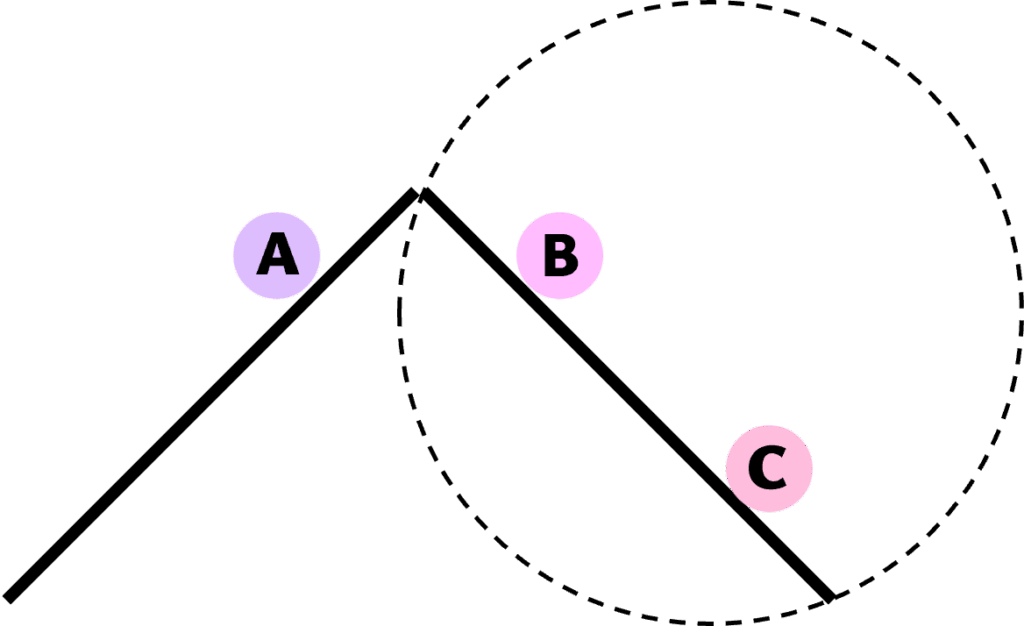
A line goes upwards, then downwards, at 45 degree angles. The line is broken at the peak. Tempers A, B, and C are evenly spaced along the line. Temper A is on one side; tempers B and C are on the other. A dashed circle surrounds tempers B and C.
Personality B is categorically more related to C, not A. B and C are on a spectrum which favors one side, changing their angle towards the other, having more similar personalities regardless of their point on the line. There is no theoretical center point; one must fall to either side.

temper (noun): “1. A tendency to be in a certain type of mood; a habitual way of thinking, behaving or reacting. 2. State of mind; mood.” (obsolete): “Constitution of body; the mixture or relative proportion of the four humours: blood, choler, phlegm, and melancholy,” Etymology, from Latin tempero: “1. I divide duly, qualify, temper, moderate. 2. I combine, compound or blend properly. 3. I rule, regulate, govern, manage, arrange, order, control. 4. I refrain or abstain (from), forbear. 5. I am moderate or temperate; I show restraint.” and tempus: “A portion or period of time (…) The kairos, right time, due season, due time, proper time, appointed time, opportune time (…) The time or age in its moral aspects; the state of the times” (Medieval Latin, rare): “The weather.” Proposed roots include Proto-Indo-European *tempos, extension of *ten- “to stretch, string,” as in stretches of time, or *temh₁- “to cut,” as in sections of time, a semantic loan from Ancient Greek tà kaíria: “1. (of place) in or at the right place; hence parts of the body: vital part, (of wounds) mortal, grave, serious 2. (of time) in season, timely, at the exact or fatal moment; lasting but for a season 3. (in superlative) chief, principal” from kairós: “1. measure; proportion; fitness 2. (of time): period (of time); season; time 3. (often in a positive sense) proper time, opportunity; prime, the right moment, the fatal spot 4. (loosely): god’s time 5. (in the plural) the times 6. advantage, profit

See also: “Old English þunwang (‘temple of the head’), Middle High German tinne, tinge (‘forehead, temples’)” temple, templar, temperature, temporary, and temperament (noun): “1. A person’s usual manner of thinking, behaving or reacting. 2. A tendency to become irritable or angry. 3. (music) The altering of certain intervals from their correct values in order to improve the moving from key to key. 4. (psychology) Individual differences in behavior that are biologically based and are relatively independent of learning, system of values and attitudes. 5. (obsolete) A moderate and proportionable mixture of elements or ingredients in a compound; the condition in which elements are mixed in their proper proportions. 6. (obsolete) Any state or condition as determined by the proportion of its ingredients or the manner in which they are mixed; consistence, composition; mixture” including even-tempered, ill-tempered, or quick-tempered

Affective Tempers

Temper is how affect is personalized. Affectemper™ is PersonalityTapestry™’s official version of affective triadic personality tempers. Affective clarifies what tempers are a preference or precedence of, but can be shortened to tempers, given context. Due to the nature of affects, affective specialization holds unique degrees and angles of attitudes and attributes, as a personal manner of being in affective experiences. These experiences trigger various suggestions, predilections, dispositions, and consequent outlooks. Specific affects arise within a general temper, which alters the nature of how each and all are felt and interpreted.

Like day-to-day “weather” (affect) being experienced through the “climate” (temper), the rain might feel very different to the desert than to the rainforest and bring different indications and impacts with it.

If uninhibited by other factors, affective tempers directly initiate and cause feelings, which as patterns or trends become a person’s worldview tendencies. As a social species, this particularly colors our views of ourselves and others, of individuals and collectives, of subjects and objects. Because all psychological facets are interconnected, affective tempers will also indirectly effect and be effected by pulsion and cognition. Affects, feelings, and worldviews are all closely connected, with tempers underpinning specialized particularities, yet all exist with the multitude of other factors within and surrounding each individual.

Assessment

A questionnaire for Affectemper™ has not yet been developed. In the meantime, as we publish more information, be sure to keep the homepage FAQ and this page in mind as you study and self-assess. Utilize “affective” and “temper” when interpreting this model’s terms and explanations, distinguishing from other facets. Tempers are inherent and irrational motivators of:

  • Base or deep-seated attachments
  • Dreams or daydreams, nightmares, and childish fantasies
  • Inexplicable fulfillment, odd satisfaction, or even morbid fascination
  • Catharsis, scratching the itch, and emotional release
  • Comfort zones or security blankets
  • Complexes, sensitivities, hang-ups, and triggers
  • Achille’s heals, vulnerabilities, or touchy or sore spots
  • Subjective experience of crisis, threats, aids, and resolution

If these dynamics and issues aren’t present (even if healthily regulated), then it isn’t temper.